Taiwan’s Ministry of National Defense (MND) has released a detailed list of weapons and capabilities planned for acquisition under its proposed NT$1.25 trillion ($40 billion) special defense budget, covering the period from 2026 to 2033. The spending package, announced by President Lai Ching-te in November 2025, is aimed at strengthening Taiwan’s deterrence posture and accelerating domestic defense industry development amid rising concerns over a potential Chinese invasion.
The disclosure followed a closed-door briefing by the defense minister to the legislature’s Foreign Affairs and National Defense Committee and was intended to address opposition criticism over transparency. The ruling administration said publication of the list would allow stalled defense modernization efforts to move forward after repeated blocking of the bill by the Kuomintang (KMT) and the Taiwan People’s Party (TPP). The ministry identified seven major capability areas, some of which align with an $11 billion US foreign military sale approved in December 2025.
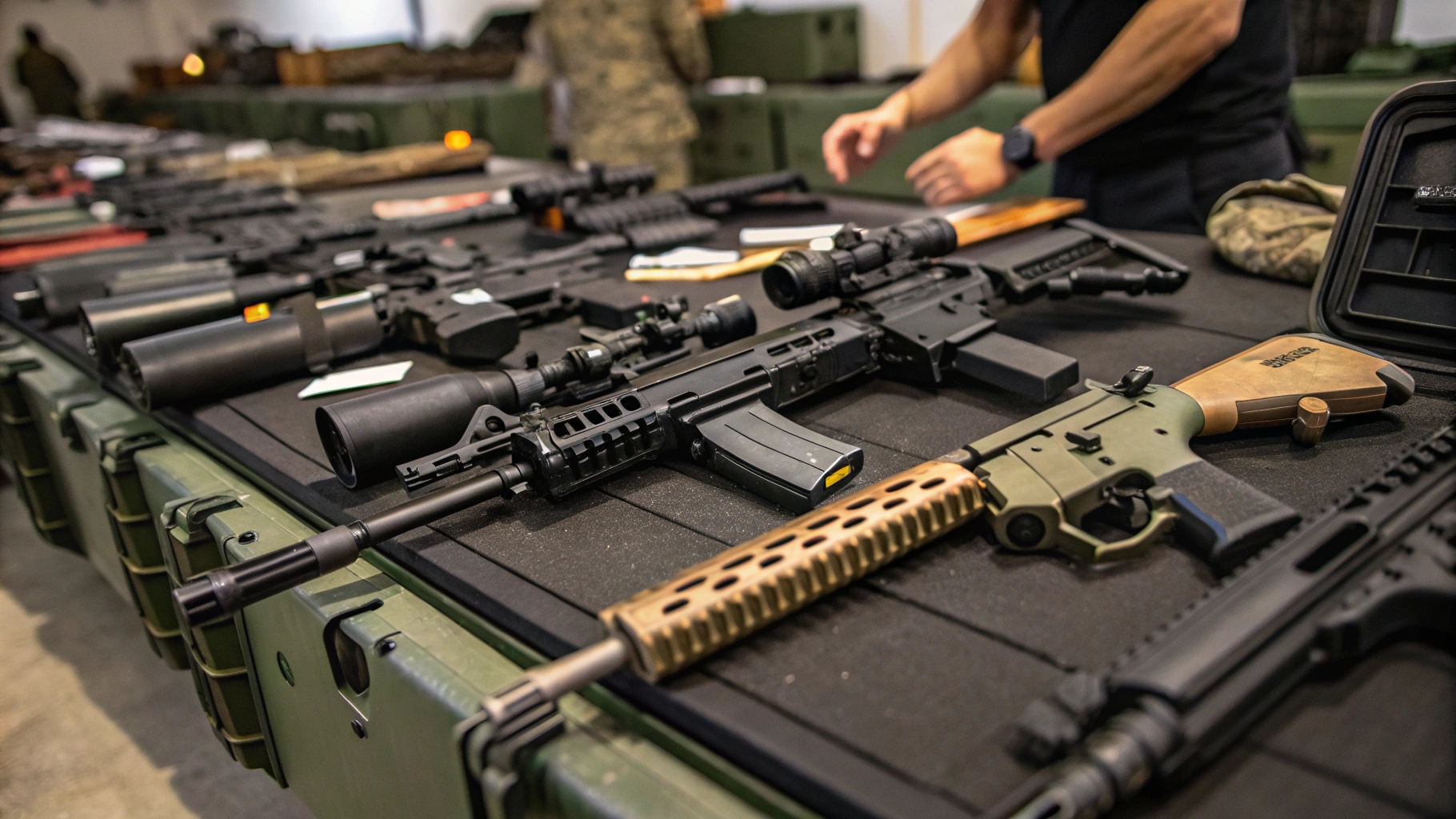
Precision artillery and long-range strike capabilities top the procurement list. Planned purchases include 60 M109A7 self-propelled howitzers, thousands of precision artillery rounds, and associated support vehicles, followed by 82 HIMARS launchers supported by over 1,200 rocket pods and 420 tactical missiles. Uncrewed and counter-drone systems also feature prominently, with procurement plans covering Altius-700M and Altius-600ISR drones, approximately 200,000 UAVs for coastal surveillance and attack missions, and more than 1,000 uncrewed surface vessels.
Additional funding is allocated to anti-armor missile systems, including Javelin and TOW-2B, AI-enabled decision-support and battlefield networking tools, and expanded wartime sustainment and domestic production capacity. Roughly NT$300 billion ($9.4 billion) is earmarked for indigenous systems, while the remainder will fund overseas procurement, largely from the United States. The package also includes funding for urgent ammunition purchases—such as tank rounds and autocannon ammunition—to bolster readiness and training ahead of expanded local production.