
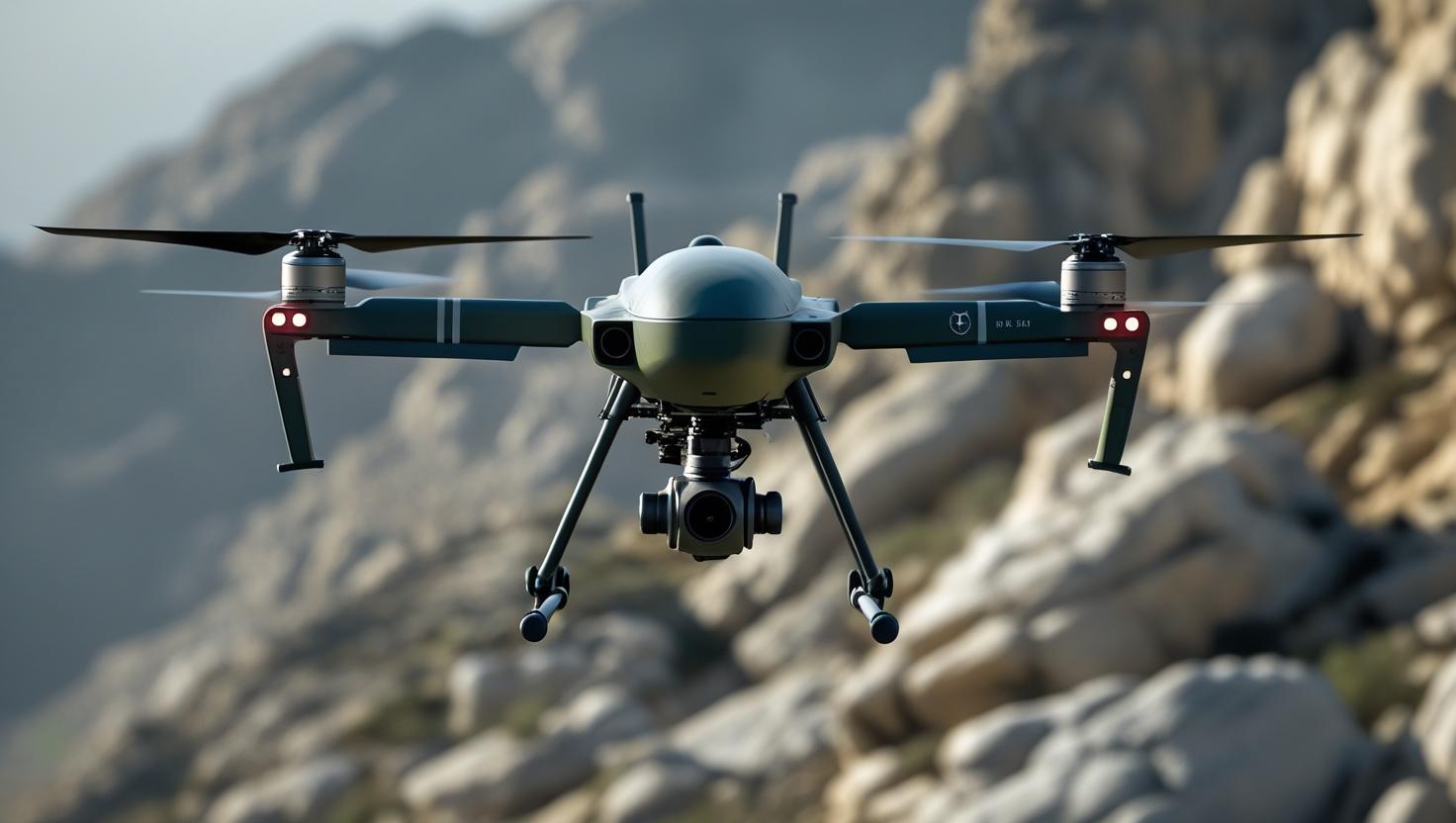
Senior US military leaders have highlighted an emerging homeland security concern, warning that existing North American defense networks are not fully prepared to counter large-scale attacks involving inexpensive unmanned aerial systems. According to Lt. Gen. Joseph Jarrard, deputy commander of US Northern Command (NORTHCOM) and vice commander of the US element of the North American Aerospace Defense Command (NORAD), current sensor networks and interception capabilities remain insufficient for detecting and defeating mass drone threats originating within domestic territory. The rapid spread of low-cost drone technology has transformed modern warfare and security planning. Small unmanned aircraft can be deployed in large numbers, often overwhelming conventional surveillance systems that were originally designed to monitor aircraft, missiles, and other traditional threats. Detecting numerous small, slow-moving targets simultaneously presents significant technical challenges for existing air-defense systems. Jarrard’s remarks reflect broader concerns within the US defense establishment that homeland defense architectures must evolve to address new forms of aerial threats. Countering drone swarms requires a combination of advanced sensors, integrated command-and-control systems, electronic warfare tools, and affordable interception methods. Relying solely on expensive missile interceptors could create an unfavorable cost imbalance when confronting low-cost unmanned systems. NORTHCOM and NORAD are responsible for protecting the airspace of the United States and Canada, making adaptation to drone threats increasingly important. Future efforts are likely to focus on expanded surveillance coverage, artificial intelligence-assisted tracking, electronic countermeasures, and scalable defensive technologies capable of responding rapidly to large numbers of drones. The warning underscores how emerging technologies are reshaping homeland defense priorities and driving modernization efforts across North America.