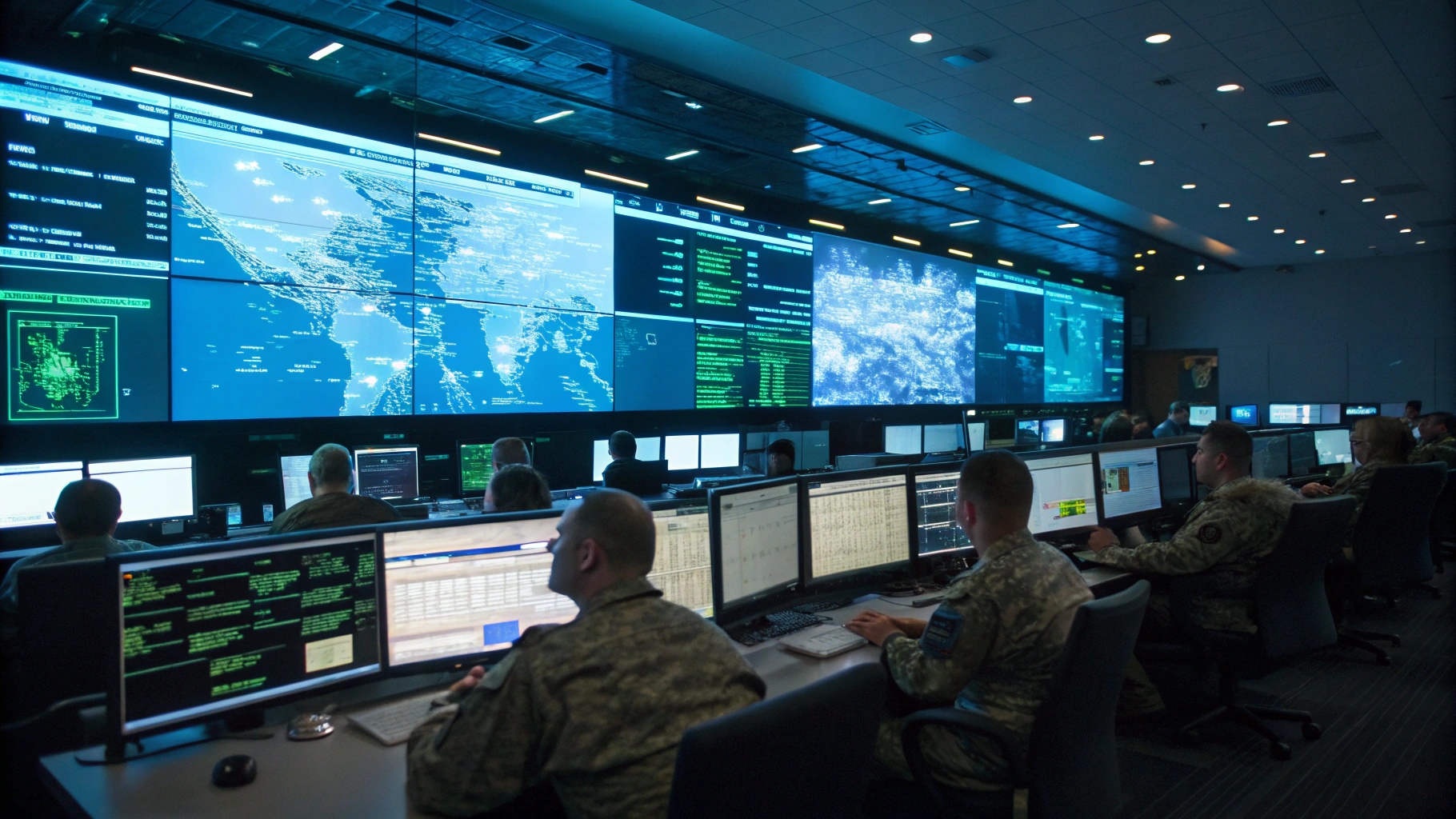

South Korean IT firm LG CNS has won two major contracts from Seoul’s Defense Information Agency to modernize the Republic of Korea’s military networks and digital infrastructure. The projects are aimed at improving interoperability, cybersecurity, and operational efficiency across the armed forces as South Korea continues to strengthen its defense digital backbone.
The first initiative will integrate communications networks used by the Army, Navy, Air Force, and the Joint Chiefs of Staff into a unified environment. Known as the Network Integration Project for Parallel Communications Networks, the effort will replace the current branch-specific systems that have limited real-time data sharing and coordination across the services.
Under the program, LG CNS will standardize network environments and deploy software-defined networking technology to centrally manage routers nationwide. The system will incorporate advanced cybersecurity measures, including firewalls, intrusion detection and prevention systems, and protections against large-scale traffic surges that could degrade or disrupt military communications.
An artificial intelligence-based monitoring platform will also be introduced to oversee network activity in real time. The system will automatically analyze potential threats within seconds, significantly accelerating response times and allowing cybersecurity personnel to focus on higher-level defense and mitigation tasks.
The second contract, titled the Next-Generation Defense Facility Integrated Information System Construction Project, focuses on overhauling how the Defense Information Agency manages military facilities. LG CNS will build a unified digital platform that standardizes data and improves coordination across all stages of facility planning, construction, maintenance, and national property management.
As part of the overhaul, the company will connect 12 internal government systems and eight external platforms, integrating administrative, financial, and operational data with geospatial information such as topographic and land parcel maps. The new system will provide defense planners with a single interface to monitor and control military facility operations nationwide.