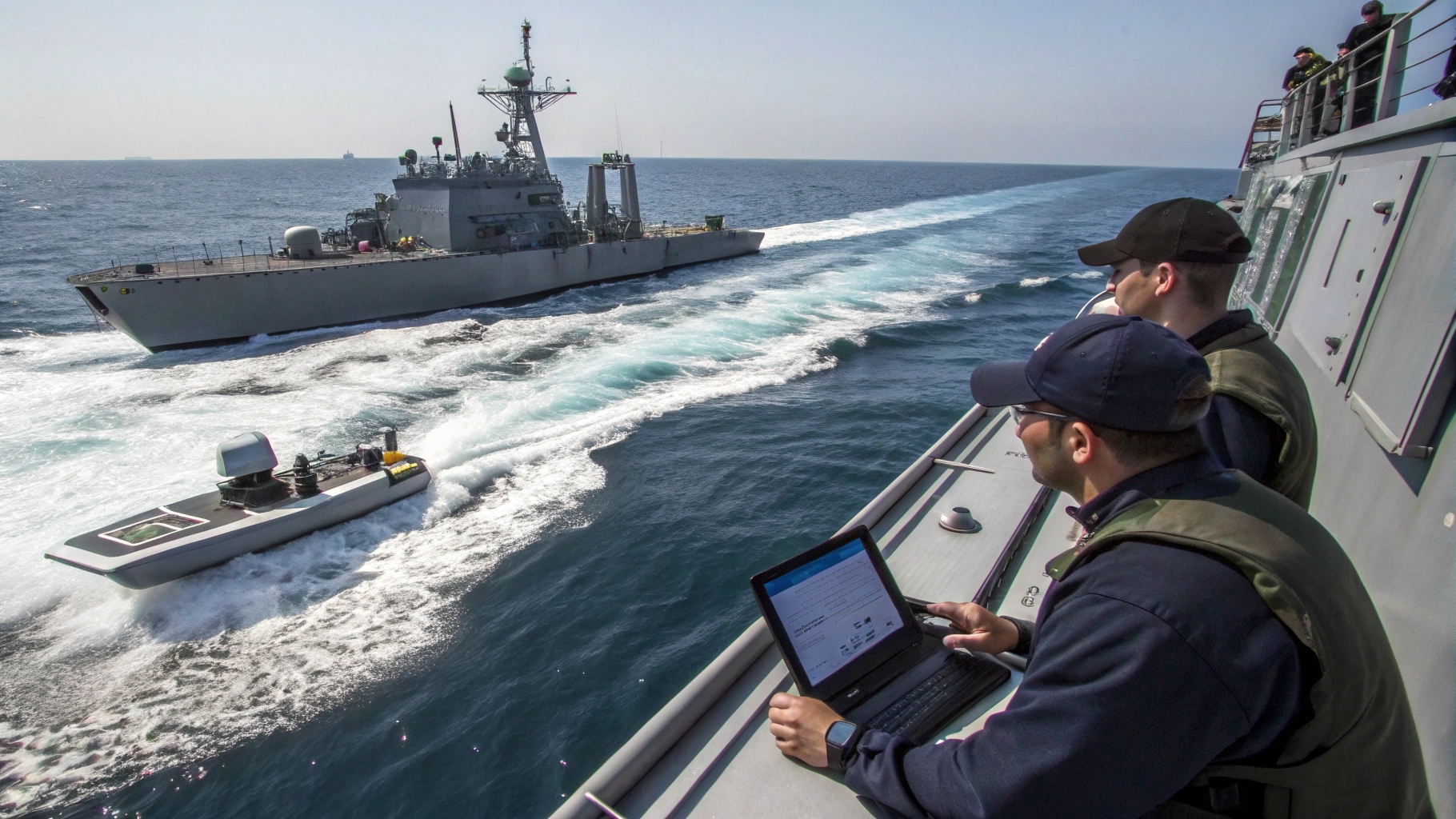
Textron Systems has unveiled a fifth-generation Multi-Mission Unmanned Surface Vessel (MMUSV), expanding its portfolio of autonomous naval platforms designed for high-end maritime operations. The latest iteration reflects growing naval demand for larger, longer-range unmanned surface vessels capable of performing multiple combat and support roles with minimal human involvement.
The new MMUSV is based on Textron’s Common Unmanned Surface Vehicle (CUSV) architecture, a modular design approach that allows rapid integration of mission payloads. Compared to earlier variants, the fifth-generation vessel offers a substantial increase in payload capacity, now supporting loads of up to 5,900 kilograms (approximately 13,000 pounds)—nearly double that of previous models.
This enhanced lift capability, combined with improved endurance and operational range, significantly broadens the vessel’s mission profile. According to Textron, the upgraded MMUSV can support surface warfare operations, mine countermeasures, intelligence, surveillance, and reconnaissance (ISR), as well as signals intelligence missions, enabling navies to deploy a single unmanned platform across diverse maritime taskings.
The development aligns with wider US Navy and allied efforts to expand autonomous surface fleets as force multipliers, reducing risk to crews while increasing operational persistence in contested maritime environments. Textron’s fifth-generation MMUSV positions the company to compete in future unmanned naval programs focused on scalable, mission-agnostic surface platforms.