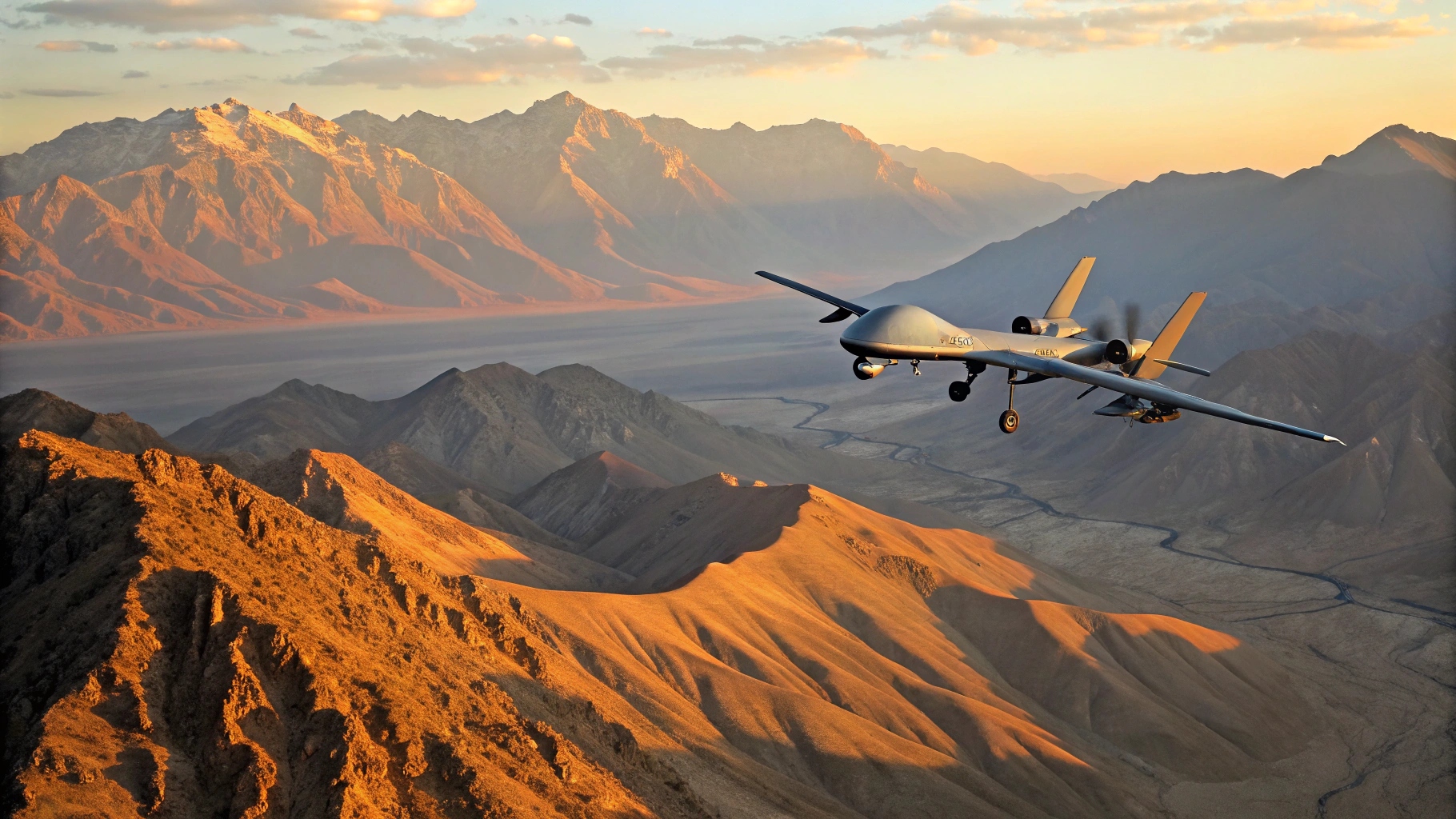
The German Armed Forces (Bundeswehr) has approved the acquisition of eight MQ-9B SeaGuardian unmanned aerial systems (UAS) from General Atomics Aeronautical Systems, marking a major upgrade to the German Navy’s maritime intelligence, surveillance, reconnaissance, and anti-submarine warfare (ASW) capabilities. Initial deliveries of the long-endurance drones are scheduled to begin in 2028, strengthening Germany’s ability to monitor vast maritime areas.
According to German defense outlet Hartpunkt, approximately €1.52 billion ($1.78 billion) has been earmarked for the program, with funding drawn from a combination of special defense funds and the regular military budget. The procurement package includes spare parts, sustainment, and flight crew training for an initial two-year period, with the aircraft expected to receive full ASW capability upgrades in 2031 and 2032.
The MQ-9B SeaGuardian will be operated by Naval Air Wing 3 “Graf Zeppelin” at Nordholz Air Base, where it will complement Germany’s manned Boeing P-8A Poseidon maritime patrol aircraft. While the P-8A offers higher transit speed and heavier weapons capacity, the MQ-9B delivers significantly greater endurance, remaining airborne for up to 30 hours, compared to roughly 10 hours for the Poseidon.
Equipped with a 2,000-kilogram payload capacity, the MQ-9B can carry electro-optical sensors, maritime surveillance radars, and sonobuoy deployment systems for submarine detection. Sensor data can be shared in real time with naval vessels, crewed aircraft, and allied forces. German defense officials noted that leveraging the operational experience of allies such as the UK and Belgium will help ensure a smooth transition to MQ-9B flight operations once infrastructure and training milestones are completed.