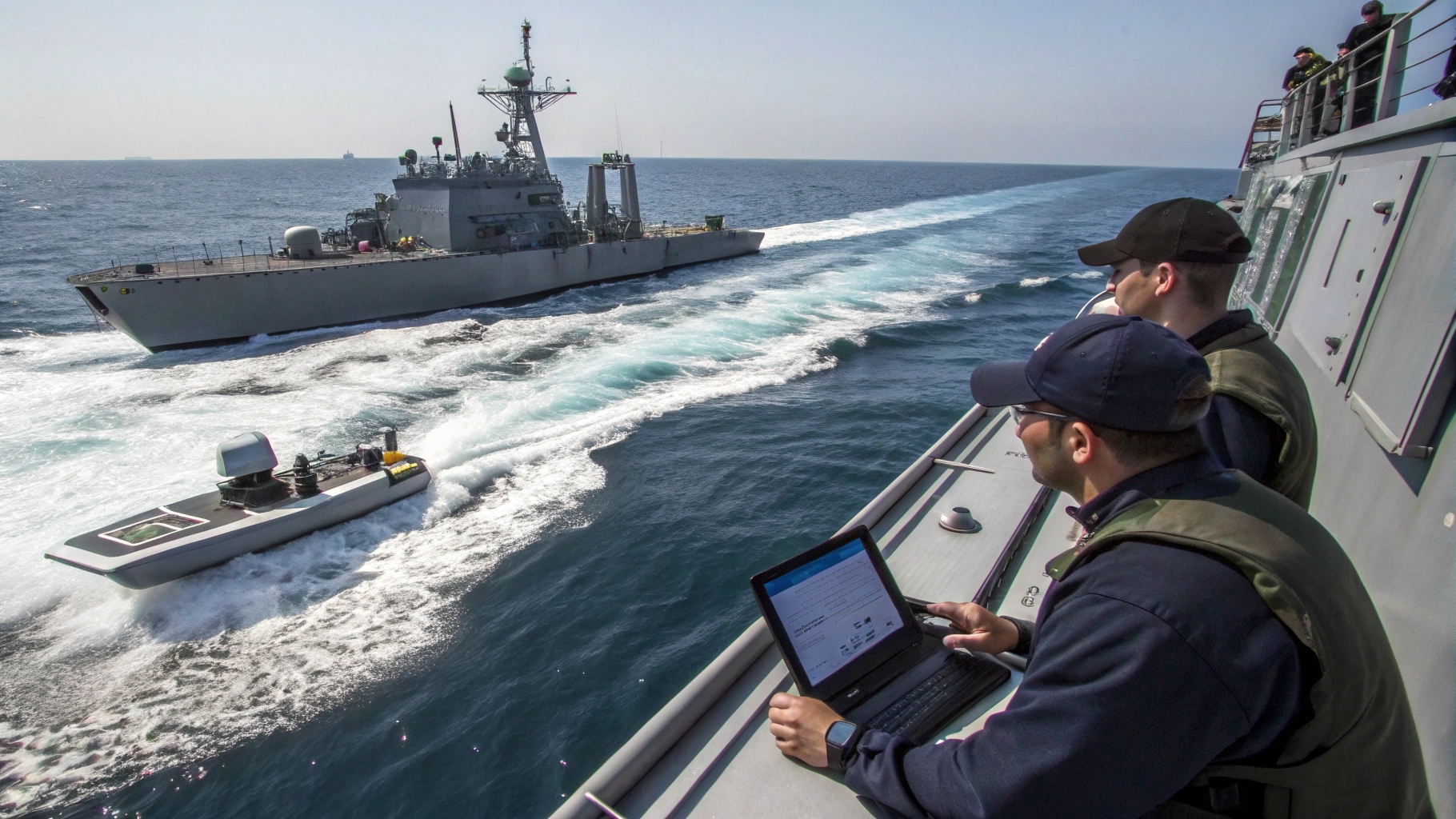
South Korea has launched a major effort to advance manned-unmanned teaming (MUM-T) at sea, focusing on the development of combat unmanned surface vessel (USV) technologies designed to operate alongside crewed naval platforms. The initiative reflects the Republic of Korea Navy’s growing emphasis on autonomous maritime operations as a force multiplier for surveillance, strike, and fleet support missions in contested waters.
Central to the program is the development of an integrated control system capable of managing navigation and high-level command functions, allowing unmanned vessels to coordinate seamlessly with manned warships. This architecture is paired with a weapons operation and launch control system that automates tasks traditionally handled by onboard crews, reducing manpower demands while improving reaction speed and mission execution. An autonomous mission system ties these elements together, supporting mission planning, coordination, and execution across the full operational cycle.
The program is led by LIG Nex1, working in collaboration with the Korea Research Institute for Defense Technology Planning and Advancement, and is supported by approximately 49 billion won ($36 million) in government funding. Scheduled to run for 60 months through December 2030, the effort is intended to mature key autonomous and combat technologies ahead of South Korea’s planned Combat Unmanned Surface Vessel Batch-II development phase, positioning the navy for expanded unmanned maritime strike operations.