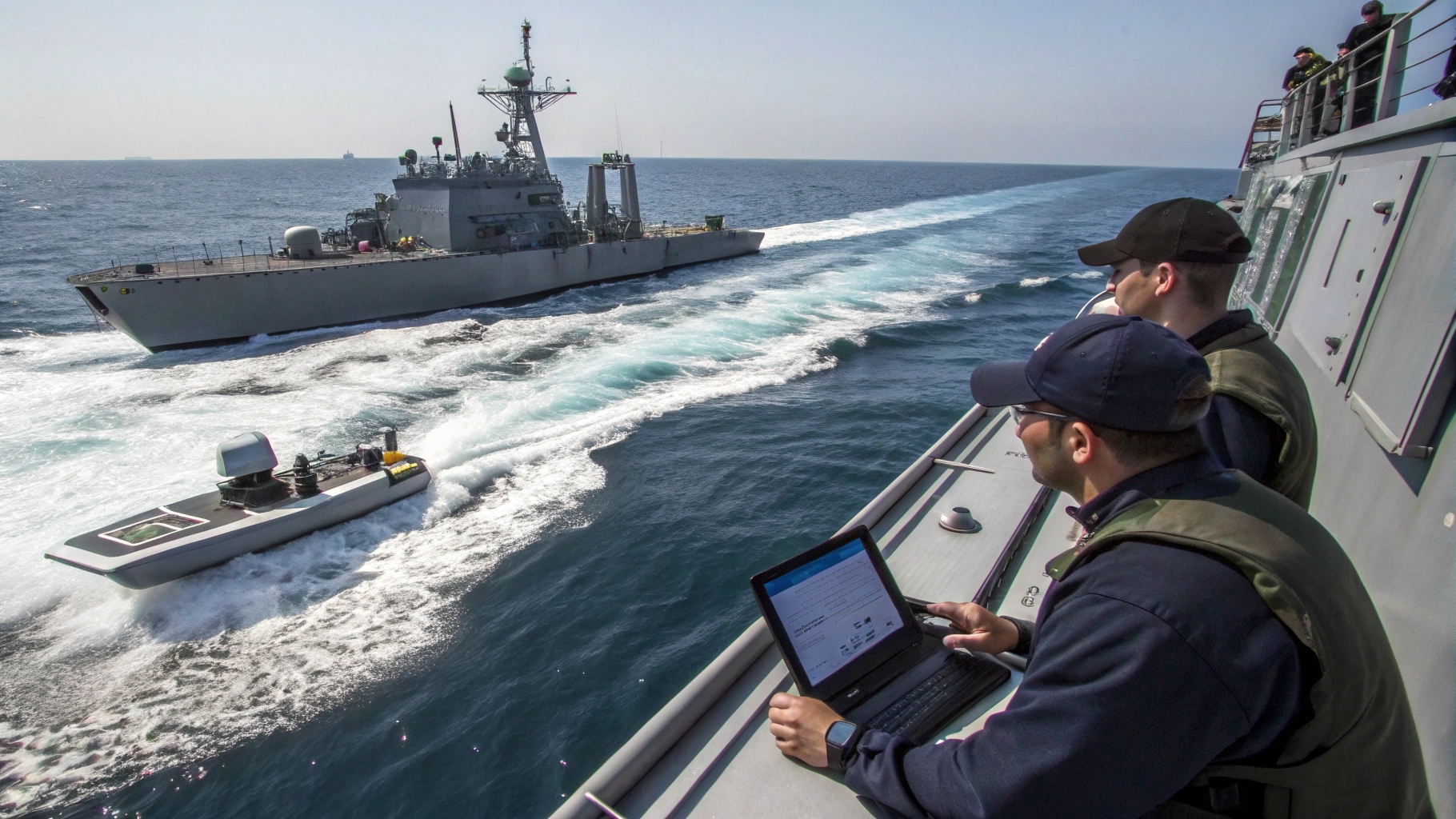
The US Navy is preparing to operationalize its first medium unmanned surface vessels (USVs), marking a major step in the integration of autonomous platforms into frontline naval operations. The Seahawk and Sea Hunter vessels will soon be assigned to fleet control, alongside the establishment of three dedicated USV divisions, according to announcements made at the Surface Navy Association’s 38th National Symposium.
Speaking at the event, Garrett Miller, commodore of Surface Development Group One, said the move reflects the navy’s intent to embed unmanned systems into routine missions rather than limit them to experimentation. The two medium USVs, each measuring approximately 135 feet (41 meters), will initially focus on surveillance, reconnaissance, and data-sharing roles, supporting manned ships with real-time information, particularly in anti-submarine warfare (ASW) operations.
Both vessels previously participated in fleet exercises during 2022 and 2023, but will now transition into operational units, with the Seahawk expected to deploy alongside a carrier strike group. Miller also highlighted the rapid expansion of small unmanned surface vessels, which grew from just four platforms to hundreds within a single year, underscoring the navy’s accelerating shift toward unmanned maritime systems.
To support this transformation, the US Navy has introduced a dedicated warfare officer career track for unmanned systems and plans to procure additional USVs capable of carrying containerized payloads, potentially including kinetic weapons. Industry partners continue to support the effort, with Leidos delivering medium USV designs and Textron Systems advancing mine countermeasures and next-generation multi-mission USVs.