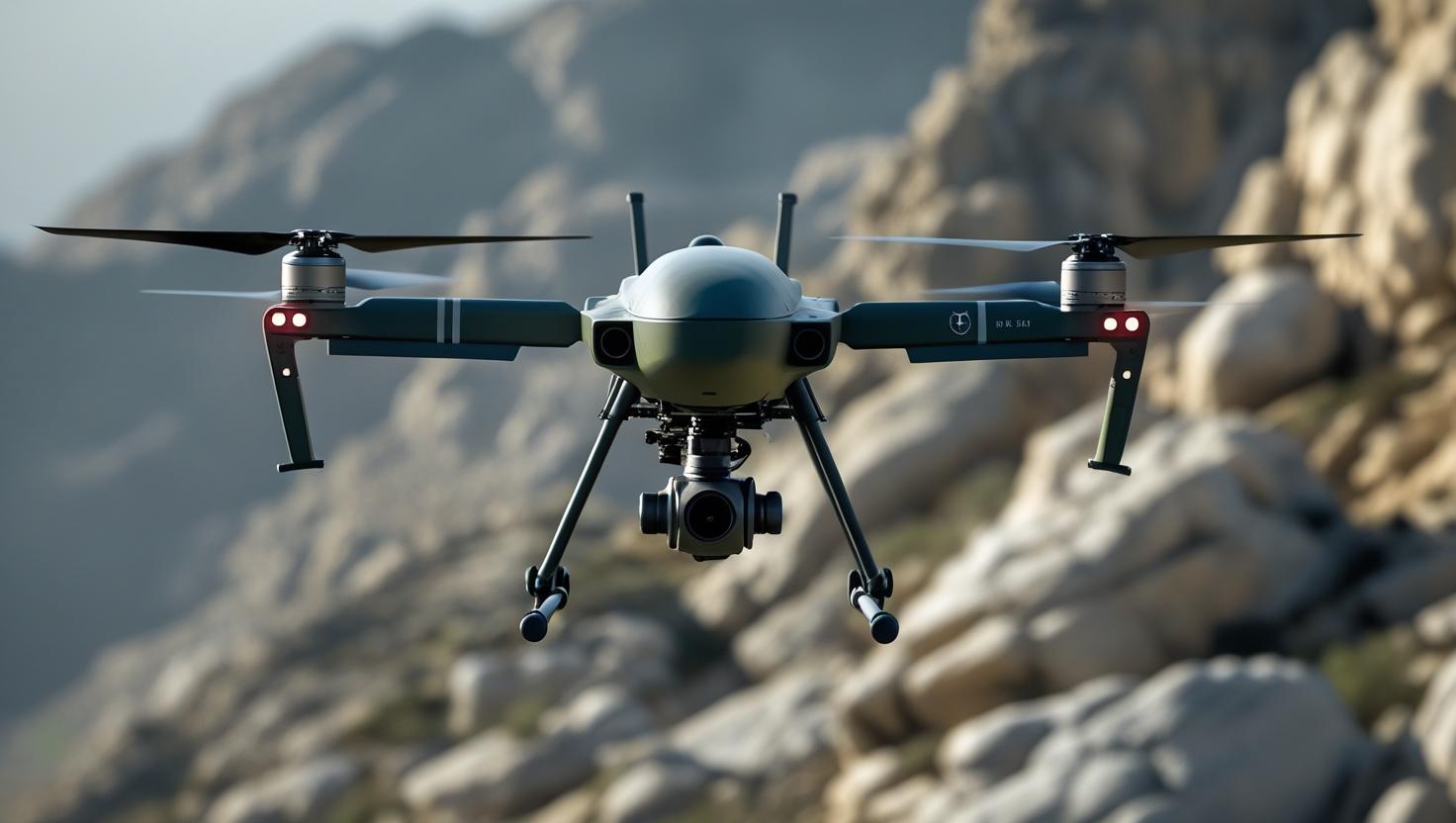

The Aeronautical Development Establishment (ADE), a premier DRDO aerospace laboratory, has begun upgrading its infrastructure to strengthen India’s indigenous aircraft and unmanned aerial vehicle development capabilities. The work focuses on modernising manufacturing assets and improving simulation facilities used to validate flight-control systems before developmental flight testing.
The programme supports future military aviation projects, including autonomous UAVs, advanced unmanned combat systems and the Advanced Medium Combat Aircraft (AMCA). These programmes require precise manufacturing and extensive ground-based validation.
A major element is the modernisation of Tooling, Assembly and Machining Systems (TAMS), which support prototype production. Existing multi-axis CNC machines will be upgraded to manufacture increasingly complex aerospace components with tighter dimensional tolerances. ADE is also enhancing high-precision metrology and inspection systems so engineers can verify components used in composite airframes, flight-control actuators and other demanding structures.
Improved calibration equipment will support machining of aerospace-grade titanium alloys and advanced composites. These materials offer high strength-to-weight ratios, corrosion resistance and benefits for reducing aircraft radar signatures. The upgraded manufacturing infrastructure should help ADE produce prototype hardware faster while maintaining aerospace quality standards.
In parallel, ADE is strengthening its Flight Control System Integration Complex in Bengaluru. The seven-storey facility contains simulation laboratories for testing flight-control software before installation on aircraft. The latest support contracts are intended to maintain specialised Hardware-in-the-Loop (HIL) and Iron Bird laboratories.
HIL testing connects real flight-control computers, sensors, actuators and avionics to simulated aircraft models. This allows engineers to identify hardware and software problems under realistic conditions before flight trials. Iron Bird rigs recreate an aircraft’s flight-control architecture on the ground, integrating hydraulic actuators, electronic flight-control computers and mechanical control surfaces.
The facilities also support pilot-in-the-loop simulators. Test pilots can assess aircraft handling and flight-control laws in a realistic cockpit environment, allowing engineers to refine software before developmental flights.
These capabilities are especially important for validating Control Laws (CLAW), which govern the behaviour of fly-by-wire aircraft. Extensive ground testing can help ensure flight-critical software performs predictably during normal and emergency conditions. Overall, the infrastructure programme strengthens ADE’s ability to prototype, validate and support future military aircraft and autonomous systems.