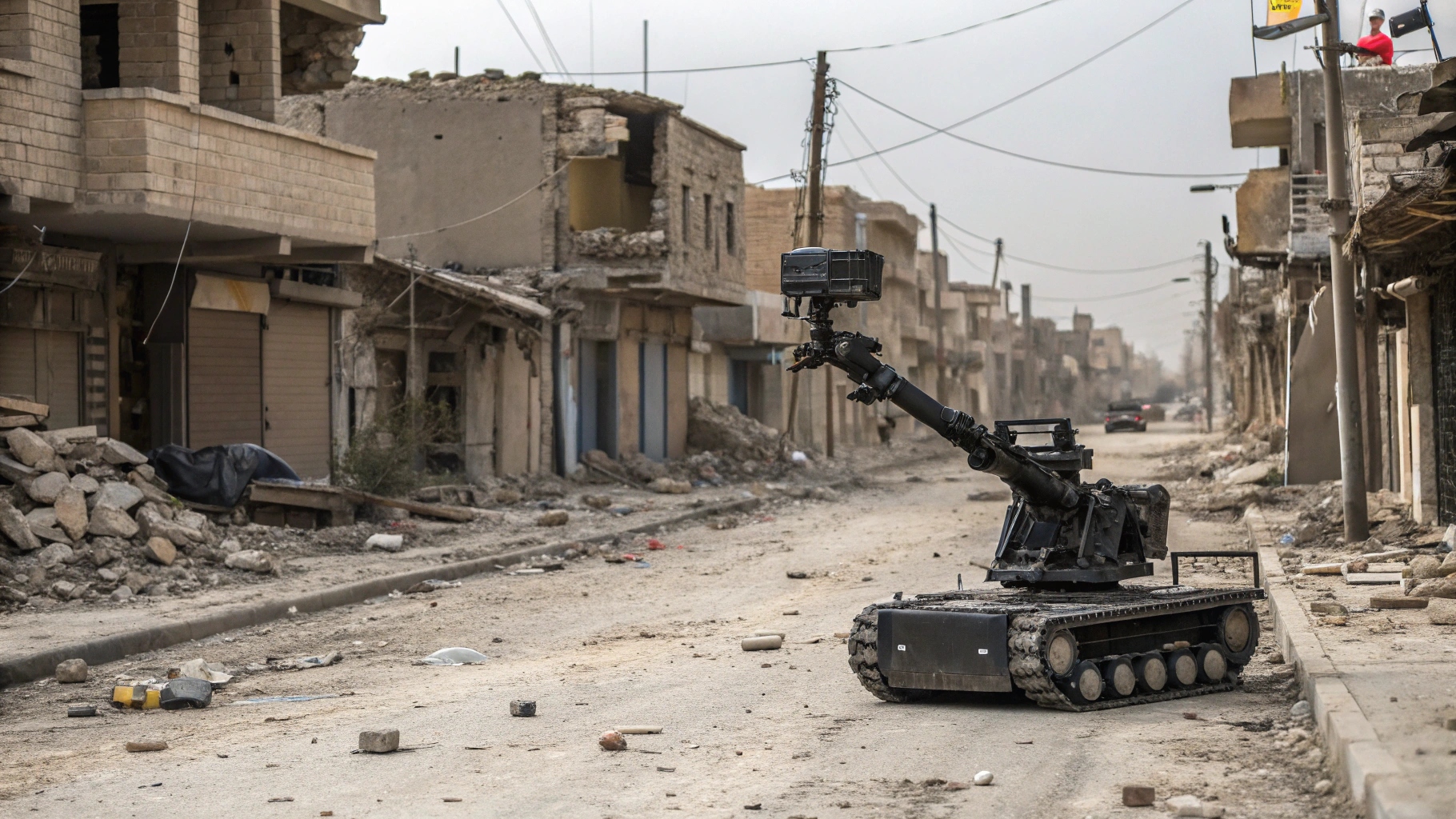
US Army Moves Toward Robotic Support for Frontline Infantry UnitsThe US Army is expanding its use of autonomous technology by selecting six companies to develop unmanned ground vehicle prototypes for missions close to the battlefield.The effort is being conducted under the Infantry Last Tactical Mile (ILTM) initiative. Its primary focus is on using robotic vehicles to transport supplies and evacuate casualties in areas where sending additional soldiers could expose them to unnecessary danger.The companies selected for the project are Maren-Go, Overland AI, Forterra, Hendrick’s Motorsports, American Rheinmetall, and HDT. Each will contribute to the Army’s effort to evaluate production-ready UGV concepts for frontline use.The “last tactical mile” represents one of the more difficult parts of military logistics. Supplies may have to travel from rear support locations to infantry units positioned much closer to hostile forces. Traditional transportation methods can require soldiers or vehicle crews to operate in exposed areas.Autonomous ground vehicles could change that model by carrying equipment without requiring a soldier to remain inside the vehicle throughout the mission. Depending on their capabilities, the platforms could transport ammunition, food, medical supplies, and other equipment to forward units.Casualty evacuation is another important part of the program. An unmanned vehicle could potentially be used to move wounded personnel from dangerous locations while reducing the number of additional troops exposed during the recovery operation.The Army’s decision to involve six different companies will provide an opportunity to compare multiple designs and approaches to autonomy. The prototypes can help officials evaluate how robotic vehicles perform in realistic military environments and how well they can support infantry operations.The initiative reflects a wider military trend toward using autonomous systems for tasks that are dangerous, repetitive, or personnel-intensive. As the technology develops, UGVs could become an increasingly common part of battlefield logistics and support operations.