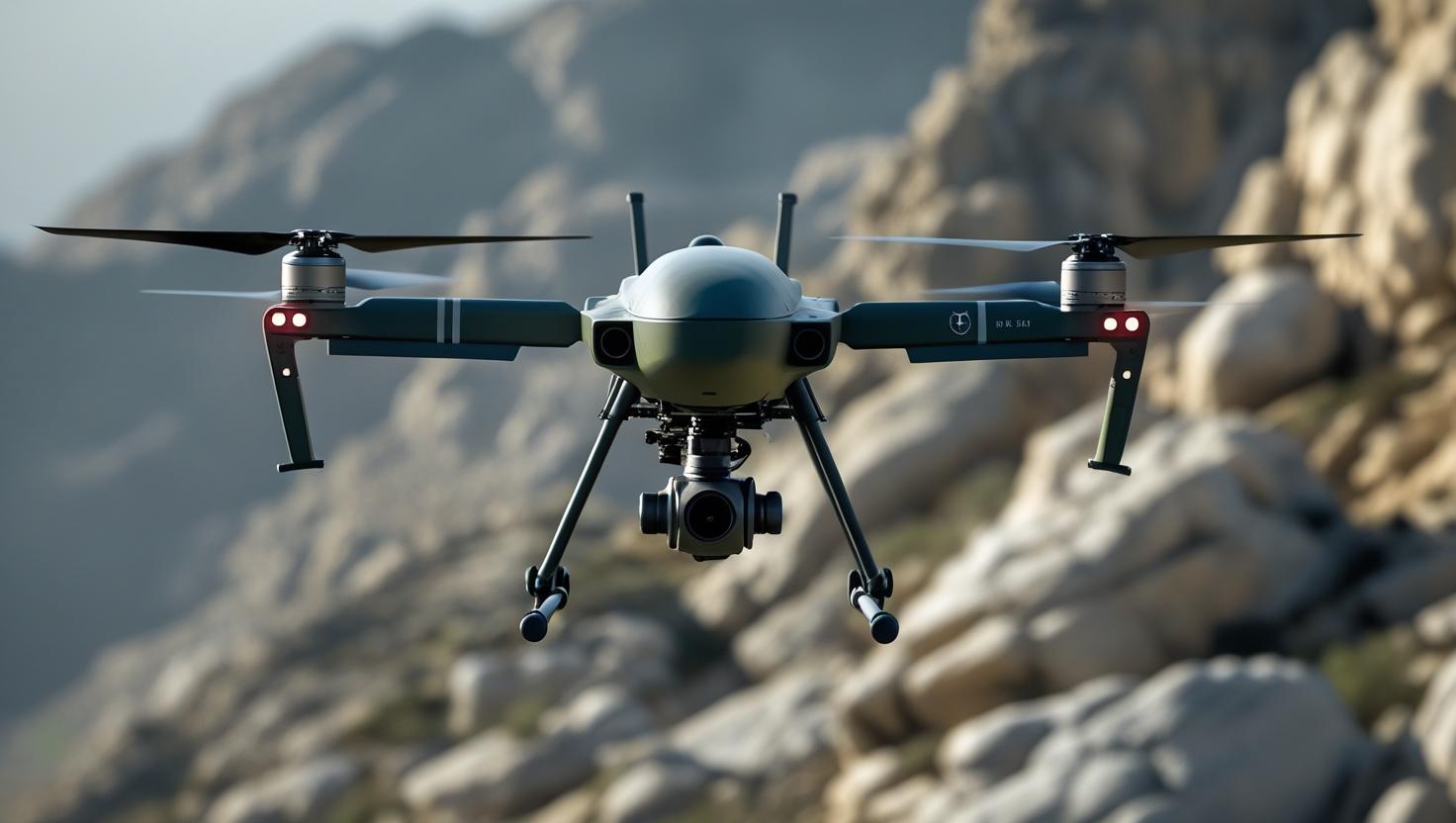
Indian companies ArcanumSpace and Quetzalcoatl are developing ARC ODIN, a hybrid tactical robotic platform designed to overcome obstacles by changing between ground and aerial modes of operation.The system can function as an unmanned ground vehicle when terrain is accessible. If an obstacle blocks its route, ARC ODIN can transition into an unmanned aerial vehicle and continue moving through the environment from the air.This dual-mode architecture is intended to provide soldiers with additional reconnaissance options in difficult terrain. Instead of requiring a separate drone to investigate areas that a ground robot cannot reach, the same platform can potentially change its operating mode.The aerial function could also provide an elevated perspective over obstacles, helping operators obtain information from areas outside their immediate line of sight. Such a capability may be useful in urban areas, mountainous terrain, or locations containing walls and other physical barriers.ARC ODIN is therefore designed around multi-domain mobility rather than a single operating environment. Ground robots generally provide endurance and surface mobility, while drones offer greater access and vertical observation. Combining the two approaches could improve mission flexibility.The development also reflects growing interest in indigenous robotic systems within India’s defense technology sector. Hybrid platforms such as ARC ODIN could eventually support surveillance, reconnaissance, route assessment, and other tactical functions.Its future effectiveness would depend on factors including autonomous navigation, flight endurance, communications, payload capacity, and the ability to transition reliably between operating modes.