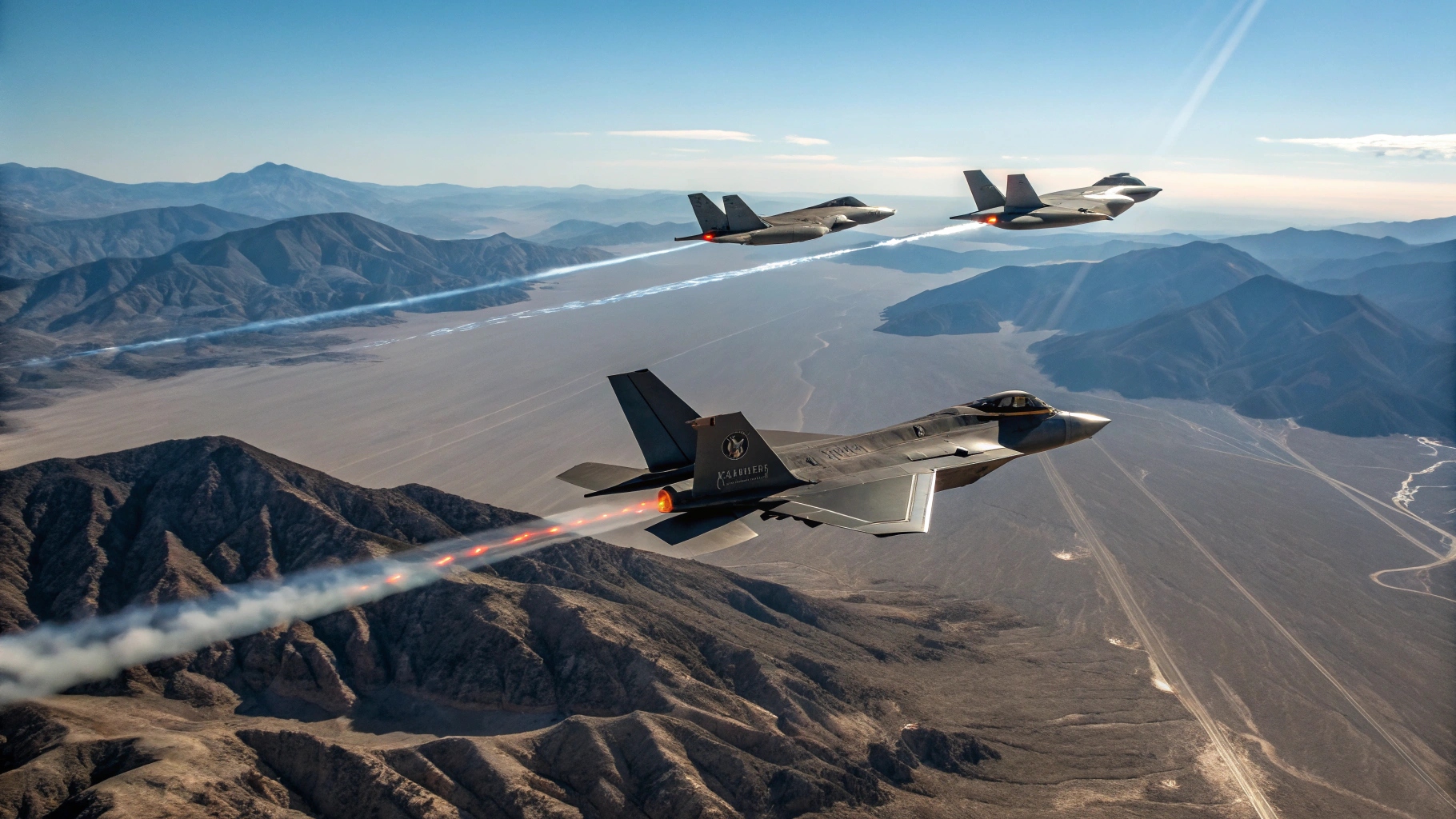
India’s Advanced Medium Combat Aircraft (AMCA) programme is approaching a critical stage as the country seeks to advance its indigenous fifth-generation stealth fighter from design development towards prototype manufacturing. First conceptualised around 2006–2007, the programme faces growing pressure to accelerate development, modernise industrial governance and address technological gaps in advanced combat aviation. Former Air Chief Marshal RKS Bhadauria has highlighted that delays in India’s fighter development efforts have not always been caused by technological limitations. Reflecting on the Light Combat Aircraft programme, he noted that after achieving Initial Operational Clearance, competing priorities, procedural complexities and organisational structures became major factors slowing decision-making. A significant change in the AMCA programme is the involvement of private-sector companies in prototype development and manufacturing through the Development-cum-Production Partner model. Three main contenders have emerged: Tata Advanced Systems Limited, which brings aerospace structure manufacturing and final assembly experience; the Larsen & Toubro consortium, supported by companies such as Dynamatic Technologies and offering heavy engineering, precision actuator and weapons-bay mechanism expertise; and the Bharat Forge-led Kalyani Group consortium, supported by partners including Data Patterns, with capabilities in precision metallurgy, structural forgings, landing gear assemblies and electronic warfare systems. The approach is intended to introduce greater industrial competition, modern project management and faster decision-making while reducing dependence on traditional public-sector manufacturing structures. The programme also faces major technological requirements involving indigenous Active Electronically Scanned Array radars, advanced sensors, propulsion, internal weapons carriage and artificial intelligence. The Uttam AESA radar is being prioritised as a domestic alternative to imported systems, while early AMCA production batches are planned around the General Electric F414 engine. Longer-term propulsion development is expected to focus on higher-thrust engines through international collaboration, including discussions involving Safran and the Gas Turbine Research Establishment. Internal weapons bays are intended to accommodate precision-guided munitions, Astra-series air-to-air missiles and stand-off weapons while preserving the aircraft’s low radar signature. AI-supported data fusion, network-centric warfare and integration of space-based information into cockpit systems are also viewed as important capabilities for future combat operations. Regional developments, particularly the deployment of Chinese fifth-generation aircraft such as the J-20 and J-35, have increased the urgency of India’s fighter modernisation efforts. Interim platforms and upgrades, including the TEJAS Mk-2, are expected to help address squadron-strength requirements, but analysts emphasise the importance of retaining sovereign control over critical technologies. The programme’s success will depend on maintaining development timelines, strengthening coordination between the Ministry of Defence, DRDO, the Aeronautical Development Agency, certification bodies and private industry, and ensuring sustained political support.