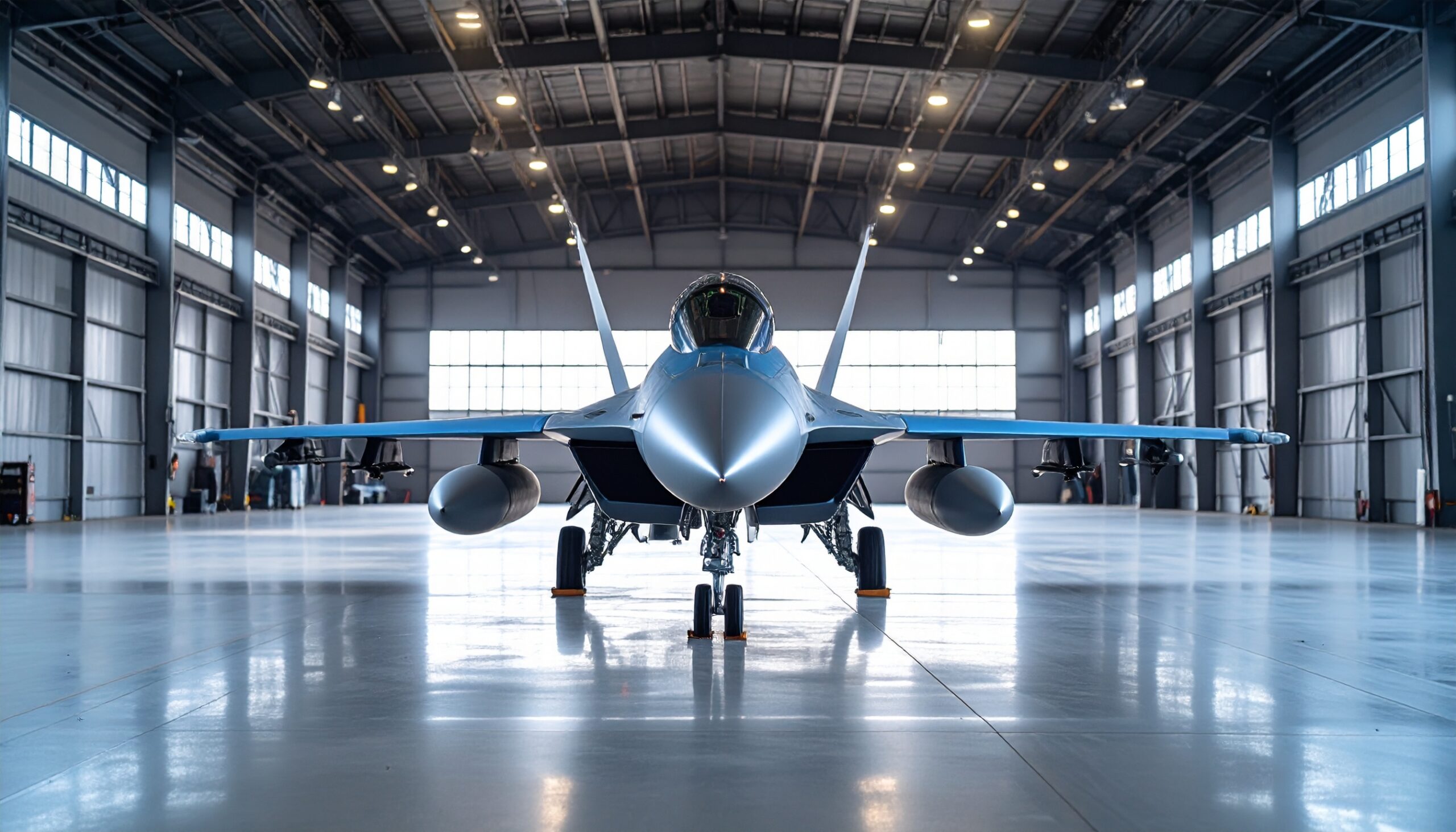
Hindustan Aeronautics Limited is completing the original 40-aircraft TEJAS Mk-1 programme while pushing ahead with the more capable Mk-1A, although engine availability continues to constrain production. GE Aerospace’s F404-IN20 deliveries have remained a major bottleneck, affecting both aircraft assembly and testing. The F404 and F414 families have been important to India’s Light Combat Aircraft programme, but delays in propulsion supplies have slowed the planned production schedule.The original Indian Air Force order consisted of 16 Initial Operational Clearance single-seat aircraft, 16 Final Operational Clearance single-seat aircraft and eight twin-seat trainers. With the final two trainers being handed over, HAL has effectively completed the initial 40-aircraft order, representing an important milestone for India’s indigenous fighter programme.Attention has now shifted toward the Mk-1A. The upgraded fighter incorporates improved combat systems and is supported by expanded manufacturing capacity and a wider supplier network. However, the programme has remained more than two years behind schedule because of F404-IN20 supply problems. Ten engines had been delivered, while HAL had assembled roughly 30 Mk-1A airframes. Around 20 had entered preliminary flight activity, although several aircraft remained grounded because engines were unavailable.HAL has imposed contractual penalties on GE over delayed deliveries. GE has committed to increasing production to 24 engines during 2026–27 and subsequently reaching an annual output of 30 engines. The Indian Air Force aims to establish its first Mk-1A squadron by March 2027 with approximately 18–20 aircraft, including trainers. This expansion is important because the IAF has around 29 operational fighter squadrons compared with an authorized requirement of roughly 42–42.5, a shortfall made more serious by the retirement of MiG-21 aircraft.HAL’s Nasik manufacturing facility, inaugurated in October 2025, increased annual capacity to 24 aircraft, with a target of 30 aircraft per year by FY2028. The additional production site reduces dependence on Bangalore and strengthens supply-chain resilience. Private-sector firms including Larsen & Toubro, Lakshmi Machine Works and Dynamatic Technologies are supplying major aero-structures and assemblies, including wings and fuselage sections. Manufacturing activities are distributed across locations such as Hyderabad and Coimbatore, contributing to an estimated ₹40,000-crore industrial opportunity.The Mk-1A brings significant improvements over the Mk-1, including the EL/M-2052 AESA radar, an indigenous electronic-warfare suite, beyond-visual-range missile capability, software-defined communications and enhanced diagnostic systems. Two aircraft have undergone modifications for weapons and systems integration, with ASRAAM and Astra trials reported successfully. While some exemptions have been accepted to facilitate early deliveries, critical functions such as radar-EW integration and missile firing remain important before full induction.HAL has stated that five Mk-1A fighters are ready for handover with contracted capabilities, while nine additional aircraft have been built and flown but require engines. The company planned to deliver five fighters by March 2026, with output expected to rise as engine availability improves. A separate order for 113 additional engines was signed in November 2025 to support the second batch of 97 aircraft and maintain continuity of the programme.