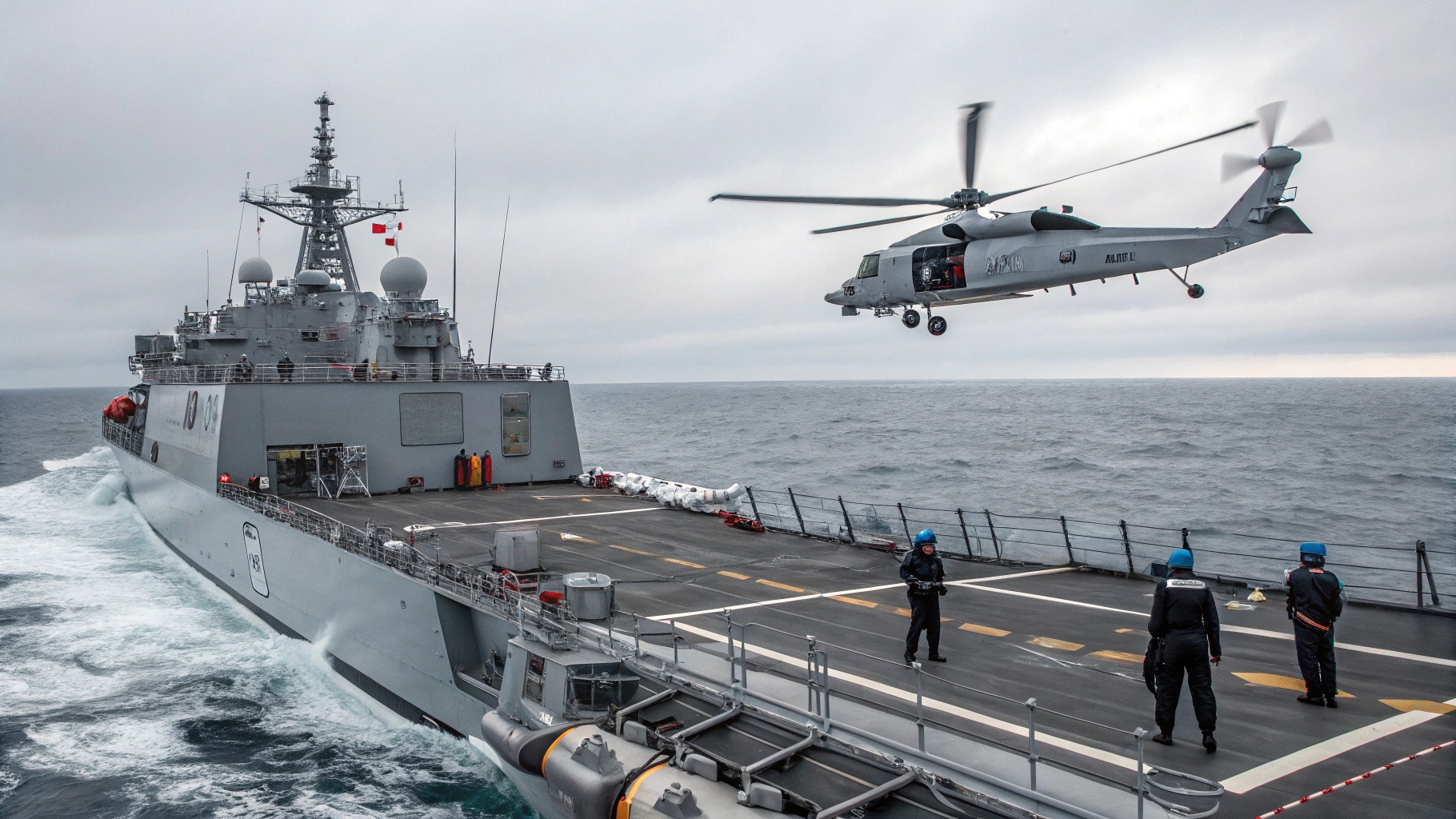
South Korea has completed development of its indigenous Maritime Attack Helicopter (MAH), marking an important achievement for its naval aviation and amphibious warfare capabilities. The aircraft is designed to counter aerial threats such as hostile helicopters and unmanned aerial vehicles while providing fire support during maritime and amphibious operations. Developed by Korea Aerospace Industries (KAI), the MAH is based on the MUH-1 Marineon naval helicopter, which itself originates from the KUH-1 Surion platform. The new variant incorporates dedicated attack equipment, advanced mission systems, and multiple weapon options for operations in challenging maritime environments. Eurocopter served as the development partner for the Surion programme. South Korea’s Defence Acquisition Program Administration (DAPA) confirmed that the helicopter completed its development programme after undergoing weapons trials, shipboard operational assessments, and environmental evaluations. It also received combat suitability approval and airworthiness certification during the final phase. The MAH can employ several weapon systems against aerial and surface targets. Reported testing included a 20mm turret-mounted gun, guided and unguided 70mm rockets, air-to-ground missiles, and air-to-air missiles intended to engage hostile helicopters and drones. Day-and-night target acquisition equipment and a helmet-mounted display are also incorporated to support accurate engagements. The helicopter has been adapted for maritime operations through corrosion-resistant features and equipment required for prolonged deployment from naval vessels. Its shipboard trials demonstrated its suitability for operations from ships, an essential capability for amphibious missions. South Korea plans to begin domestic production of approximately 20 helicopters in 2027. This will mark the transition from development to manufacturing and eventual operational deployment, strengthening the country’s maritime defence posture. Once introduced, the MAH is expected to support amphibious assault units, escort transport helicopters, and improve the mobility and survivability of marine forces during complex missions. It will also extend South Korea’s amphibious capabilities into the air domain. Although development has been completed, the milestone does not itself confirm that the helicopter has entered full operational service. Further details on deployment, operational testing, sensor performance, and integration with frontline units will help establish its overall combat capability.